
Issue 16- Fall 2025
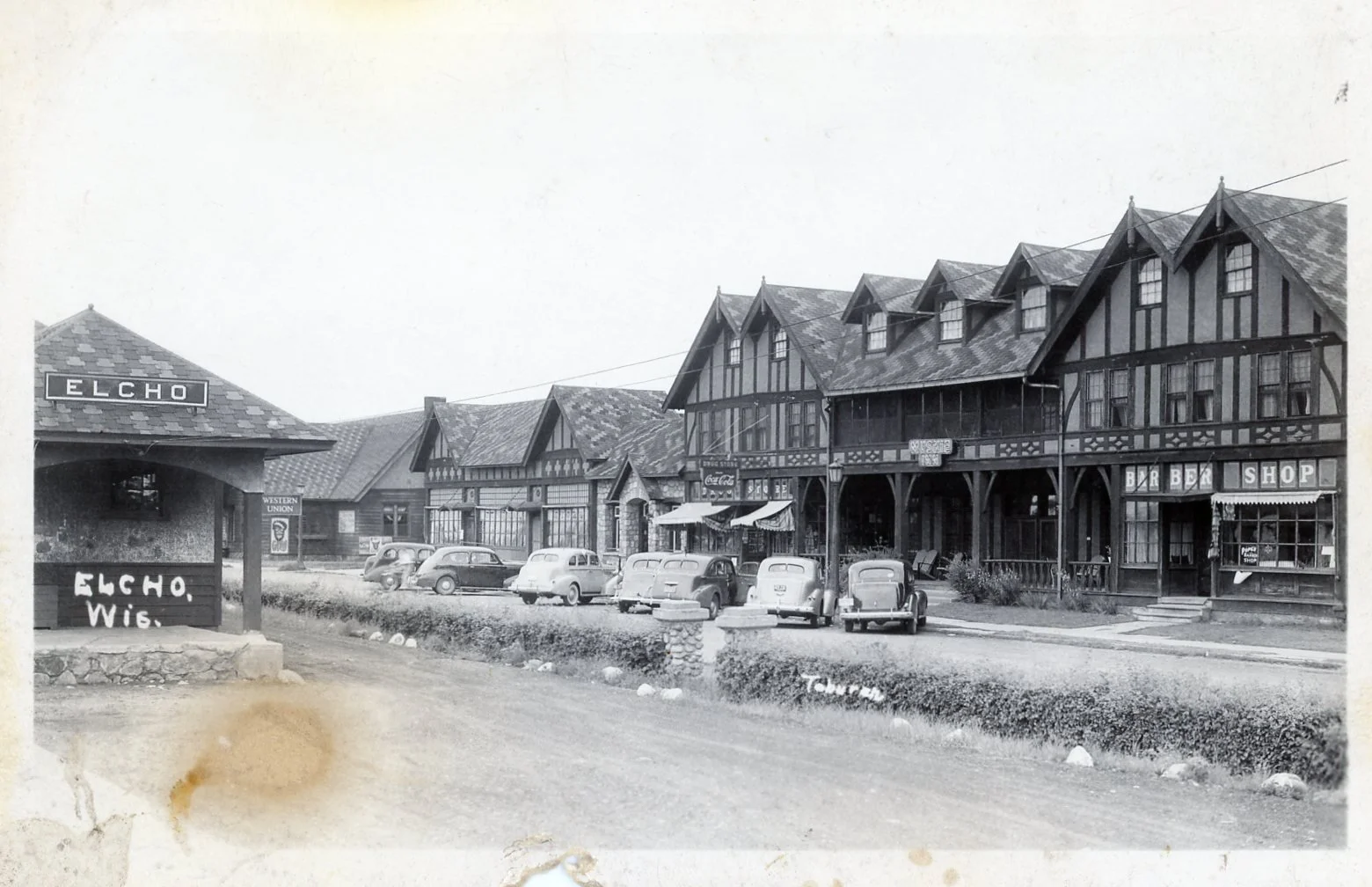
Rebuilt Elcho Business Distric
Letter from the President
By Bear Wheeler
As I was penning this little article, Wisconsin’s autumn was exploding with beauty. Just when you think September’s colors were at their best, middle October brings the yellows of the birch and aspen trees, splashes of orange from the last of the maples, and the beautiful deep reds of the oaks. Battering rains and winds will eventually make the trees surrender their colors, covering the ground with an autumn quilt work. As the season continues to change, nature will give us a hard frost and the birth of the snows during the low-light months. The late season will give us the gift of a beautiful snow cover for the Christmas holiday. There is always something to see and appreciate here in the Northwoods of Wisconsin.
Thinking about something to see, the museum’s progress this past season has been absolutely wonderful. I drive by the old Grange Hall on a daily basis, and I remember what the building was, and now see what it has become. It looks like a jewel in the Elcho area more and more. The decks have been graciously built by Dan Imig. Mike Vanderbunt, his Elcho school boys, and Greg Mejak painted the long side walls of the building. The old Grange Hall sign was rebuilt and painted by Karen (Roethle) Parise with Wyatt Wheeler hanging it outside the entryway door. Attic ventilation was carefully crafted and installed by AK Construction. The beautiful outdoor lighting was installed by Dale Loving, and folks, this is just the outside of the building!
When walking into the old Modern Woodmen/Grange building at night, the interior just glows when the lights are on. It is so beautiful. The awesome mural that Karen (Roethle) Parise has painted will set you back a bit, especially when the stage lights are on. The colors she chose for it are amazing. Saying we appreciate her donation is an understatement. The “lore” of the woman in the vagabond gypsy wagon, her home away from home, parked along the hall only adds to the story of the mural. The glow in the room was created by Dale Loving who installed all of the wiring to make electrical lighting possible. The woodwork was done by Dan Wink, whose machining skills are perfectly matched to do this tedious work. The wainscoting was produced by Enterprise Wood Products, duplicating the original. Dan also duplicated the original trim and installed it along with the wainscoting on the building’s walls. By the time you read this, the main floor will be well on its way to being set up with displays and the jewelry cases. The society hired movers to move the heavy cases up from the basement, and move other items to the basement for storage.
This is all possible due to the wonderful people, companies, and organizations that donated funds to the society. Debi Mejak was the spark behind many of the monetary donations. She understands our story and makes it known to people and then the dream blossoms. Greg Mejak’s accounting skills keep this so organized and well-funded. Otto Tiegs III as our museum’s curator has been researching and structuring the layout of the museum and deciding on what displays go up and when. As that goes on, the grass doesn’t stop growing either, and Bryan Spransy keeps our grounds looking presentable. In his absence this summer, Adam Jacobs and his crew kept the grounds neat and trim. Thank you to all who are listed here and to those that aren’t mentioned. I appreciate everyone’s skills and expertise, as it doesn’t have to fall on one person. Please enjoy the feature article about the deadly 1902 Summit Lake Chicago & North Western railroad accident. Remember the people and families involved with this tragic moment in our history over a century ago. Otto put much into this article. Visit our website to read more on the Elcho area’s history and enjoy the winter months!
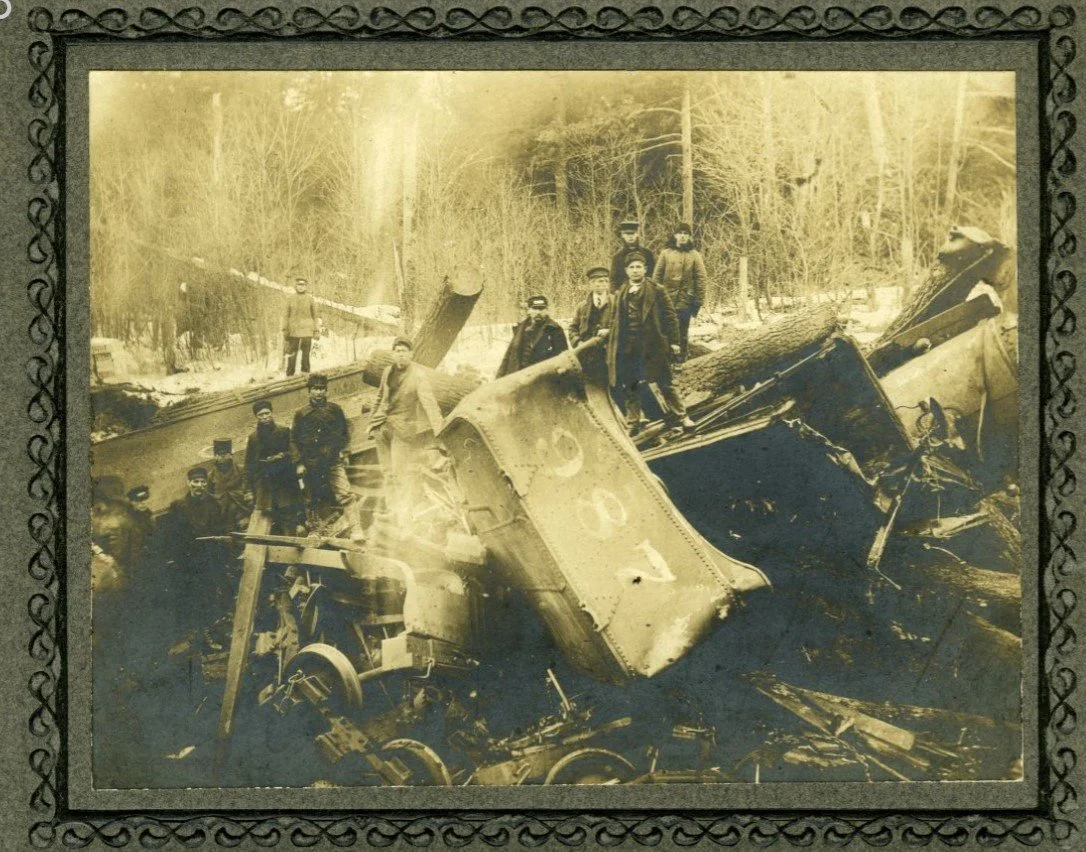
1902 Wreckage of Trains 189 and 50
1902 Chicago and North Western Summit Lake Railroad Accident
by Otto Tiegs
The railroads of the late 1800’s opened up millions of acres of land across the United States to farming, logging, and mining. Goods could be transported by railroads anywhere in the states, and as a result, markets opened for raw materials and finished goods. Transportation meant that food and material costs could be lowered, and labor could be transported where needed.
Railroaders of the early 1900’s had tough working conditions. Nationally, a worker could expect to work twelve hours (sometimes sixteen hours) a day, six days a week in all kinds of weather. One out of every 30 railroad employees could expect to be injured on the job, and one out of every 400 could expect to die while working. Thirty-three thousand railroad workers died between 1902 and 1911 working on the nation's railroads.
In 1882, the Milwaukee Lakeshore and Western Railroad had reached Summit Lake, and later expanded to Elcho, Monico, and points beyond. The route between the two communities required the railroad to lay track on the steep slope of the Great Divide and was considered to be one of the heaviest grades on the C&NW Ashland Division. Engines leaving Elcho needed a lot of steam power to climb the grade to Summit Lake.
When the Chicago-Northwestern took over the ML&W in 1897, the line had established regularly scheduled passenger and freight service, all of which passed through Antigo and Elcho. The Chicago & Northwestern began the process of making Antigo the Ashland Division headquarters and many of the railroad workers already called it home because it was centrally located on the line they worked.
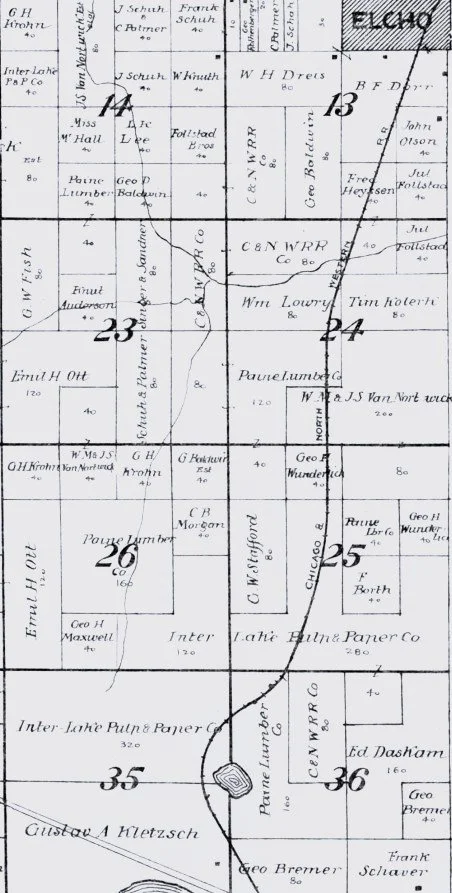
1913 Map of CNW track South of Elcho
Saturday, February 22, 1902, started like any other day for the train crews on the Ashland Division. Weather reports predicted partly cloudy skies with moderate February temperatures. The moon was full and would have lit the night sky anytime a cloud was not in the way. Train number 189 was a fast freight scheduled out of Antigo; its engine's tender loaded with coal and water to make its northward run. The stationary engineer had the engine steamed up and ready to go to work. The crew consisting of engineer Harry Hogan, fireman Charles Clark, brakeman Roy Middaugh, and conductor John Lindgreen edged the steam engine out of the city and began to climb the long steady grade to Summit Lake, near the top of the Great Divide. Once at the Summit Lake siding, conductor John Lindgreen had orders to wait five minutes for a southbound freight train. If the crew did not meet the southbound engine after five minutes, they were to proceed north.
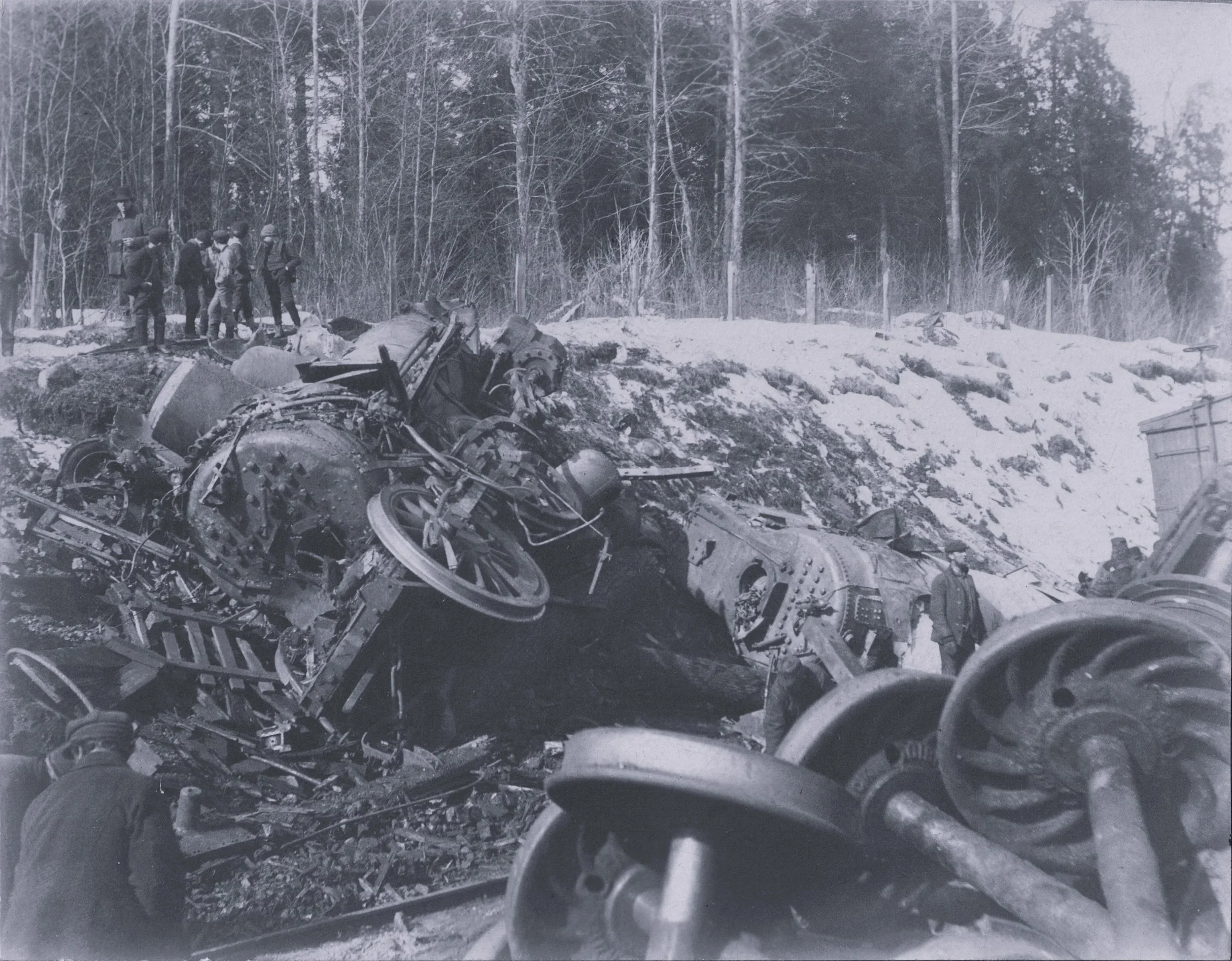
Both Engines Ripped Apart and Destroyed
Train number 50 left Monico as a way freight, the engine was to stop and deliver (or pick up) freight at stations and sidings needing service along the way. This crew consisted of engineer Charles McCarthy, brakeman Fred Lyon, fireman Albert Nightser, and conductor Harry Jennings. The freight train also had two passengers in the caboose, E. C. Lange of Antigo, and W. E. Dodge of Wausau. Once out of Elcho, train 50 would have to pass over the Hunting River, and gain speed to enter a steep winding grade, cut into a gap, with a limited sight distance to advance up Summit Hill.
Northbound 189 pulled out of Summit Lake after waiting the assigned five minutes, using the downhill grade to Elcho to build up speed. Southbound 50 left Elcho steaming up to the limit to travel up the Great Divide with right of track orders to Summit Lake. The engineers were the first to see the headlights of the other engines coming around the corner and shouted a warning cry to their engine crews to jump. The engines collided where the rails entered the mouth of the cut at the base Summit Hill. Both engines were ripped apart, and all but three railcars of lumber and merchandise were destroyed.

Wrecking Crews Moving Engine
Fred Lyon was in no position to jump from the southbound engine and died instantly, Roy Maddaugh attempted to jump from the northbound, but was pinched to death between the engine and tender. Albert Nightzer was killed instantly as the southbound engine landed on top of his body.
McCarthy, Hogan, and Clark were found badly injured, but alive, by the conductors, who were also bruised quite severely. Passengers Lange and Dodge ran to the Summit Lake depot to report what had happened. A relief train was organized by railway workers in Antigo, and Dr. I. D. Steffen provided medical attention to the survivors. Fred Lyon's and Roy Middaugh's bodies were found Saturday night among the wreckage of the engines and transported to Antigo's Stewart & Kiefer's undertaking rooms. Nightser's body was not found until Sunday morning when the Kaukauna and Ironwood wrecking crews moved the engine that he was trapped under.
Sunday passenger trains had to be routed on other C&NW branches around Antigo until wreckage was removed and new rail laid on the roadbed. A noon passenger train was organized at Antigo to accommodate ticketed passengers that would have taken those trains and was the first to pass through the site. In addition to those passengers, two hundred Antigo sightseers also traveled to Summit Lake to view the wreckage, some had their photos taken by the wreckage, and many others brought pieces of the wreckage back with them as souvenirs.

Sightseers Viewing the Wreckage
Today the old C&NW rail bed serves as a snowmobile trail.
The men that died:
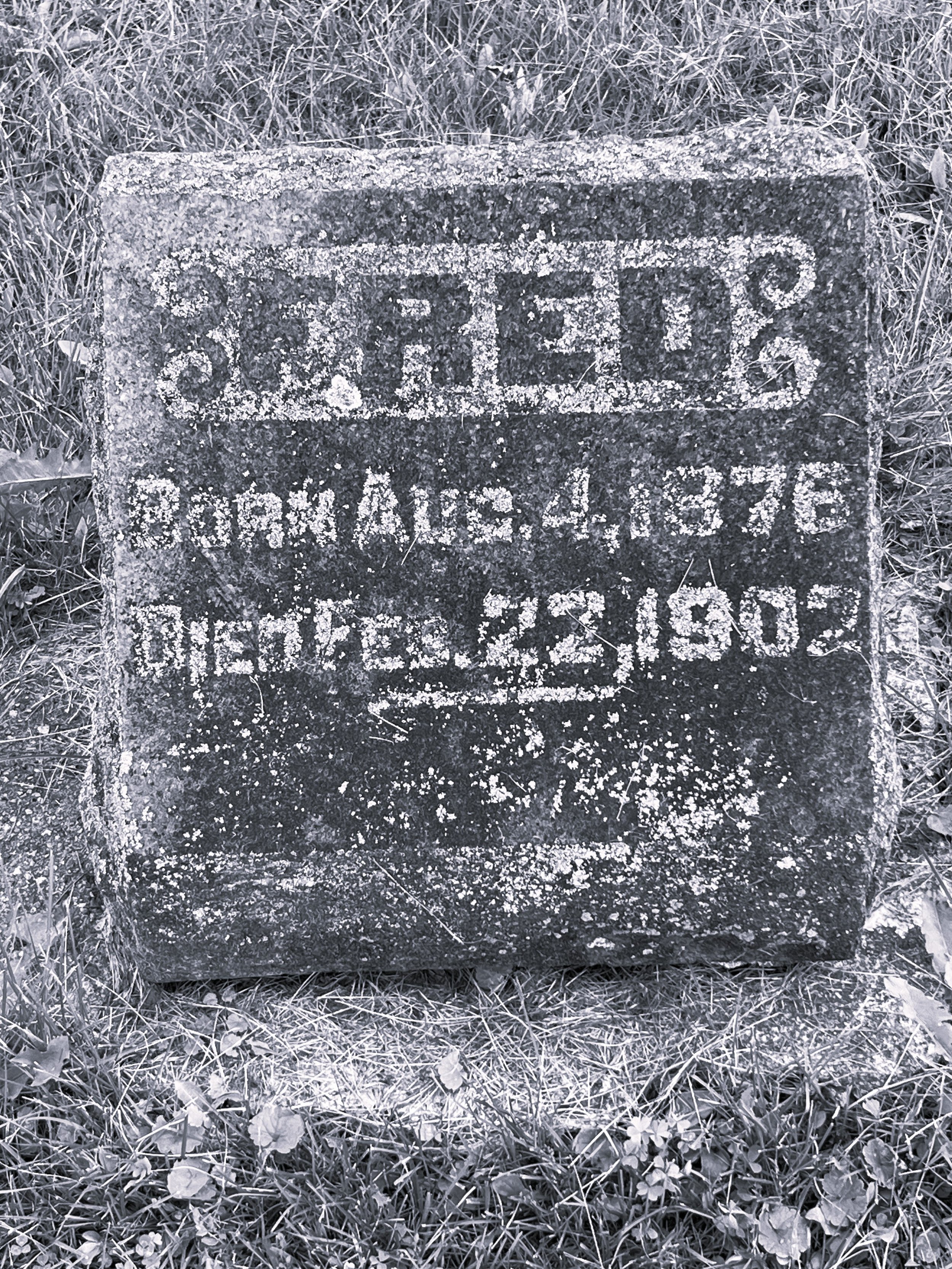
Fred Lyon
Fred Lyon was twenty-five years old and was born in Ashland, Wisconsin in 1876. Many members of his family worked for the railroad, including his father who was one of the oldest C&NW conductors on the Ashland Division. He lived with his parents in Antigo on Virginia Street and this is where his funeral was held as well. The Brotherhood of Railroad Trainmen followed the body from the home to the Antigo Cemetery where he was laid to rest.
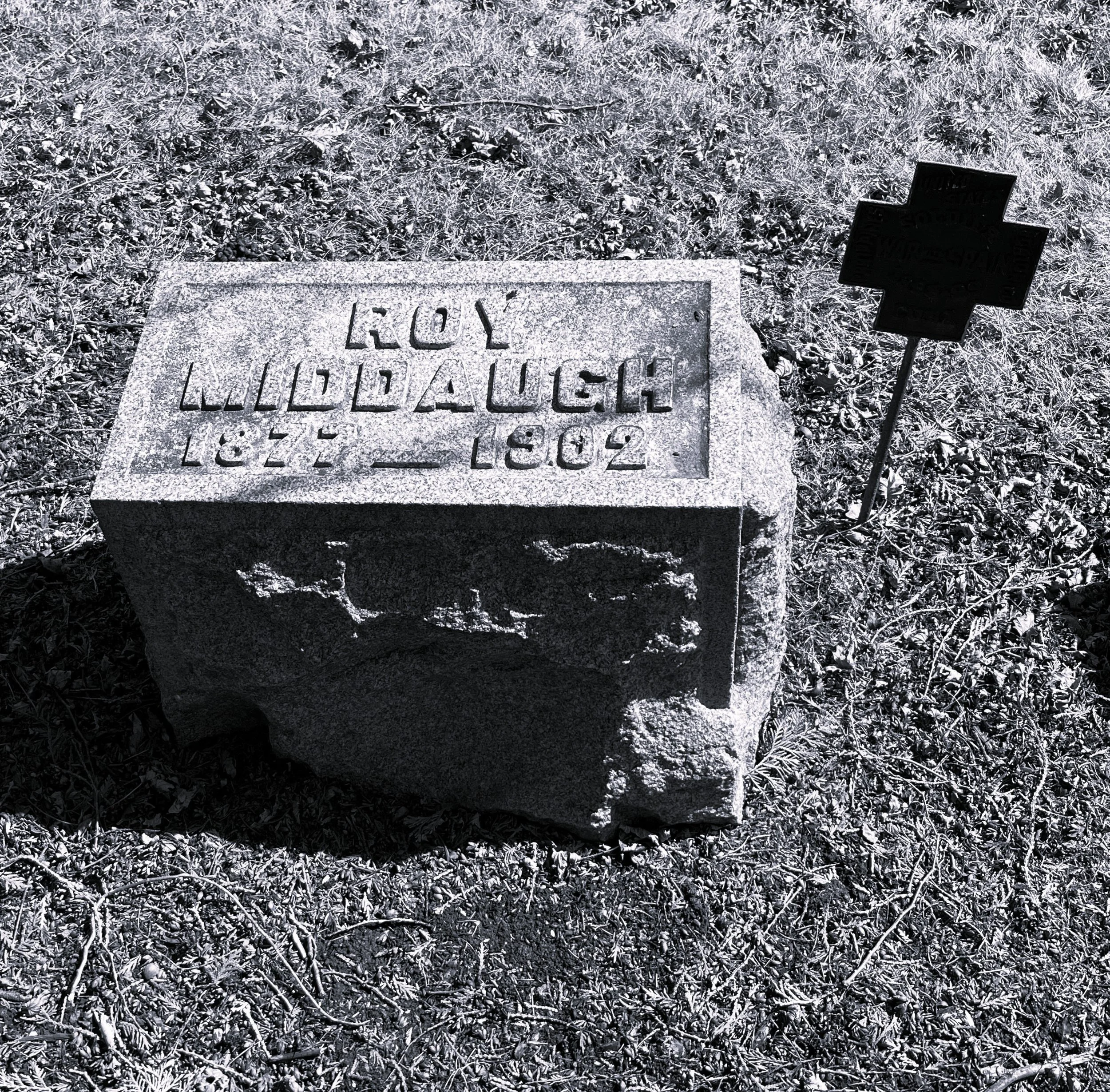
Roy Middaugh
Roy Middaugh was born in Waseca, Minnesota. His parents traveled from their new home Hayward, Wisconsin, to Antigo, and along with his brothers and sisters accompanied his remains to Waupun, Wisconsin, where his funeral was conducted at the home of his aunt, Angie Wilcox. His body was laid to rest in the family plot at the Forest Mound Cemetery. His was 25 years old and a veteran of the Spanish-American War.
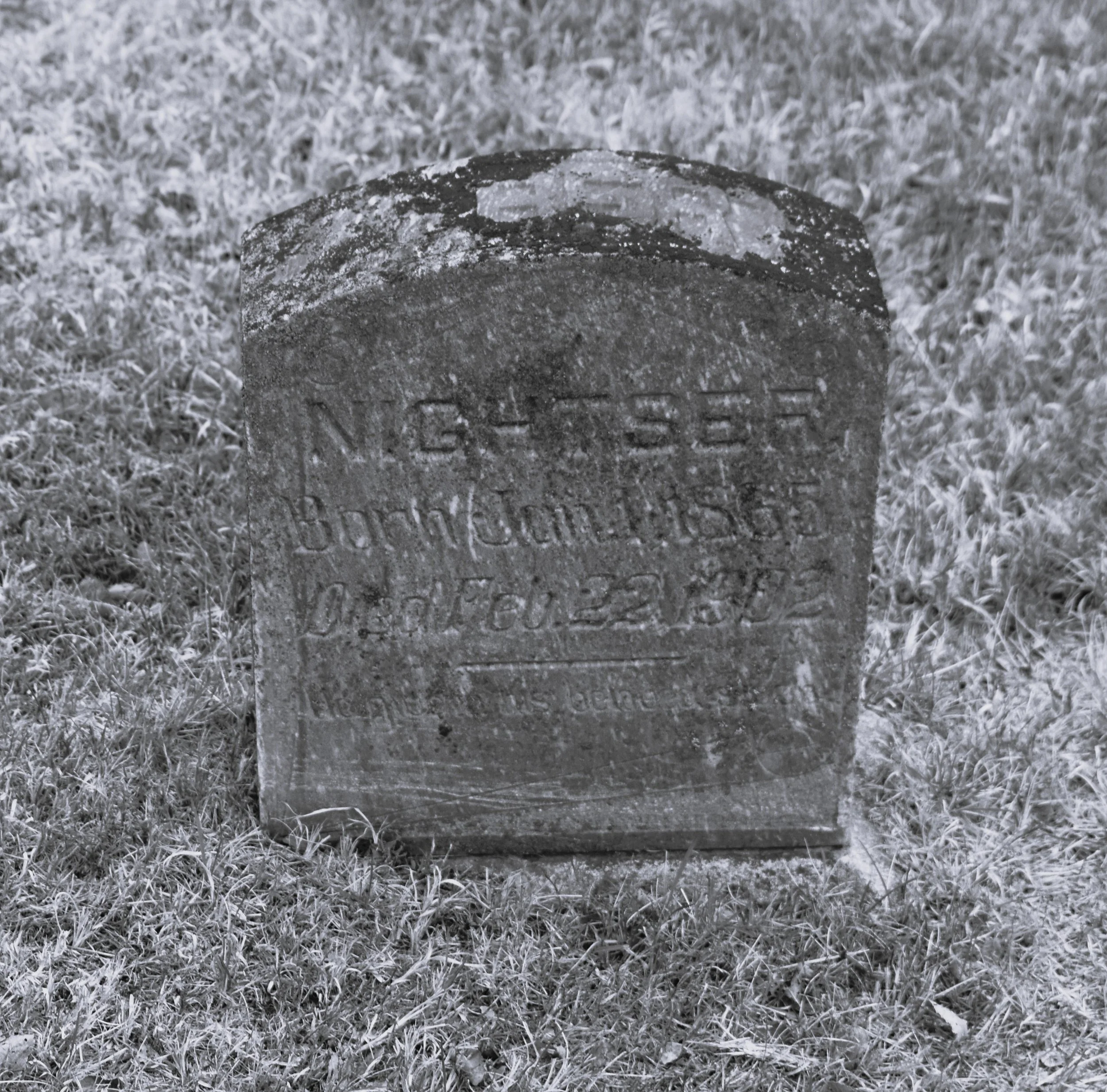
Albert “Bert” Nightser
Albert "Bert" Nightser was thirty-seven years old and his body was laid to rest at the Sunset View Cemetery in his hometown of Washta, Iowa. His body was accompanied to Washta by his wife Elizabeth, a one-year-old daughter, and family from Wausau. He and his wife lived in Sheboygan, Wisconsin, and were in the process of moving to Antigo. She was informed of his death while attending a family ball. The Chicago & Northwestern transported her to the scene of the wreck from the party.

From Left to Right: Pope Memminger, Al Kramer, Bill Kramer, Al Brandow, Jack Kramer, Gordon Kramer and Gary Kramer
Making Your Ancestors Memories Come Alive
By Bear Wheeler
I have chased both sides of my family’s history across the oceans, and it seems that I have exhausted all the research avenues I can find on them. I will not bother you with the details, but the facts I have found on my ancestors would astonish you. People who are real history lovers do these crazy deep information dives, not because they don’t have anything better to do with their time, but because they love the chase into the past. This type of historical research digs up the real raw history of America and how this nation came into being. Everyone had a part in it.
Too often I hear of how families have thrown out old pictures and information of deceased relatives, especially of those relatives they cannot name or identify. When families that settled in small towns like Elcho, Pelican Lake, and Summit Lake, kept their old photographs and history, and allow the historical society to used that information, it makes our past easier to put together, to formulate a period in time. I’ve been taking information from many different families, combining it with old newspaper articles and information from ancestry sites, and saving it on familysearch.org. This is a free database site that also protects the identities of living people. This subscription free site is also very easy to use. Many families already have someone researching their ancestors and have family trees in place. Amature researchers using familysearch.org can also upload photos of their ancestors, allowing historians like myself to see how our ancestors appeared. By identifying an individual in a photo, I can also look at additional photos from that era, and hopefully identify them at work, in family settings and in other communities.
Some families have very few old pictures. Many early pioneer families did not live close enough to population centers where photo developing was accessible. Developing photos was also expensive, so finances also may have been an issue. Other families may have a zillion pictures because they had access to film developers and the resources to pay for the photos. Regardless of the situation, those photos are valuable to our communities and our historical society.
When the Elcho Historical Society Museum opens to the public, we will have a kiosk in the building, dedicated entirely to viewing family photographs. Visitors will have the ability to view family members and pioneer photos from the Elcho area’s past. Many families have donated photos to the historical society. Other families have allowed the society to digitize their pictures and preserve their family’s story for future generations. Your great-great grandparents images could be several clicks away, saved for future generations to see. Also, once internet access is available at the museum, visitors will be able to search for ancestors using familysearch.org.
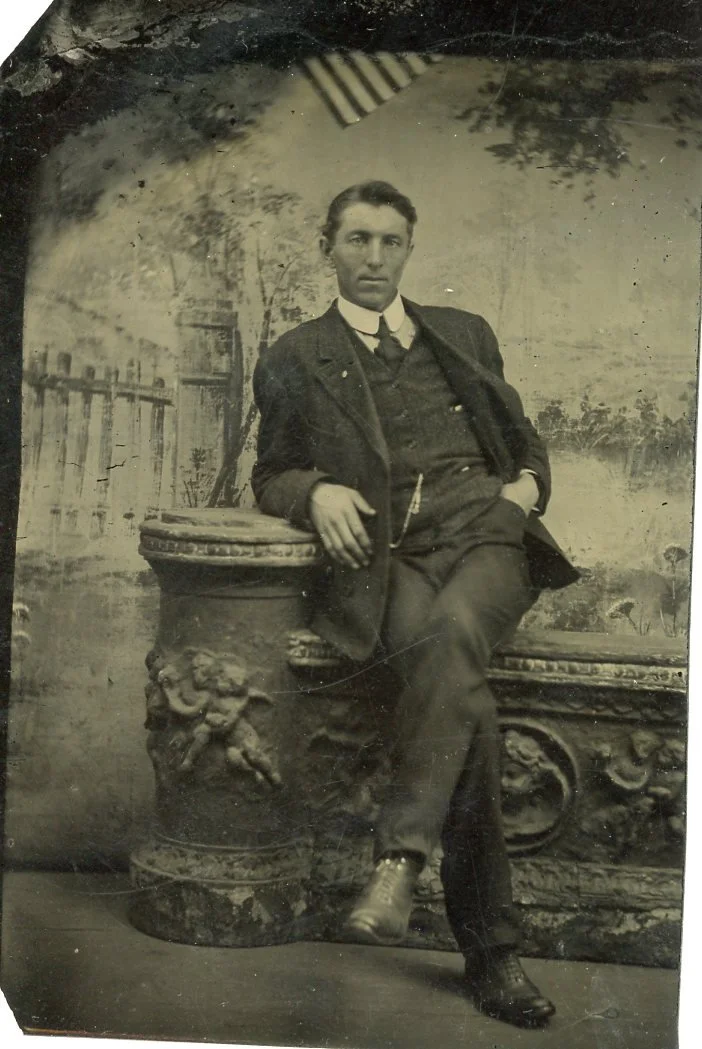
Charles (Kiempe) Visser - Rod Visser’s uncle. Charles was born in the Netherlands and resided in Sheboygan Falls and would come to Elcho to visit family.
Thank You - Fall 2025
Items Donated
Lamont Kraft - Photos on canvas pictures for sale/raffle
Allison Piech - Items for rummage sale
Anonymous - Refrigerator, card table, chairs, bucket
Sue Mackowski - Picture of Muskie Inn
Mark Paradis- Food for Brat Barn
UCC Women's Fellowship - Soda for Brat Barn
Dennis Boettcher - Elcho School Jackets (2) & football photo
Pat & Mary Ann Evans Patrick - Food for Brat Barn
Bill & Charlotte Kraft - Movie projector & outboard motors
In Memoriam Donations
Andrew Jirovec in memory of Adolph Jirovec
Michael B. Winter in memory of Nancy Stauffer Winter
Dennis & Linda Peterson in memory of Nancy Winter
Monetary Donations
Russel Perry - Oshkosh, WI
Bill and Charlotte Kraft - Fall Creek, WI
The Schmidt Family - Big Rock, TN
Wayne Baum - Elcho, WI
Holy Family Catholic Church - Elcho, WI
Kurt & Donna Jacobson - Appleton, WI
Building Renovation
Karen Roethle-Parise, Fairfield Bay AR - Labor to paint mural
Dan Wink - Carpentry work on inside of Grange Hall
Dan Imig - Porch and handicap ramp
Mike Vanderbunt and Elcho School Students - Exterior painting
Sheldon Foundation - Minneapolis, MN
Rasa Knox & Jim Obrien - Elcho, WI & Jensen Beach, FL
Kenneth & Gwendolyn Katz – Sarasota, FL & Elcho, WI
Membership Renewals
Kathy & David Karlsen - Racine, WI
Steve Bradley - Antigo, WI
Noreen & James Haiduk - Geneva, IL
Donald R & Nancy S Winter - Eau Claire, WI
Linda & Jeff Herman - Plymouth, MN
Dale Bartel - Green Bay, WI
Jean Porten - Eagle River, WI
Clare Ramuta - Summit Lake, WI
Margie Vogel Krogel, Bradenton, FL
James Pukall - Deerbrook, WI
Vicki & Russ Prochnow - Elcho, WI
Sarilee Maney - Wauwatosa, WI
Barbara Weaver - Pelican Lake, WI
Amelia (Milly) Rugland - Appleton, WI
Carl & Susan Buesing - Summit Lake, WI & Mexico
John Liss - Elcho, WI
New Members
Judith Black - Deerbrook, WI
Connie & Dan Wild - Antigo, WI
Ava Jean Krueger - Thiensville, WI
Yvonne Larme - Milwaukee, WI
Norman & Marlies Irby - Potosi, WI
Lillian Novak - Deerbrook, WI
Tracy Murray - Verona, WI
Tom & Joni Gannon - Orlando, FL
Robbi Heighway & Richard Nebel - Waukesha, WI
Tinker, Jule & Walter Raith - Neenah, WI
Mike & Maureen Winter - Summit Lake, WI
Emilie & Michael Muelver - Deerbrook, WI
Jeanette & Mark Bjerke - Waukesha, WI
In addition to the specific individuals listed above, we would like to THANK all those that supported, baked and worked on our Brat Barns, Music in the Park, craft fairs, fundraising events and the museum restoration project. We couldn't have accomplished what we did this year without all your generous time and effort.