
Biographical Sketch: Anton Follstad December 7, 1861 – August 25,1946
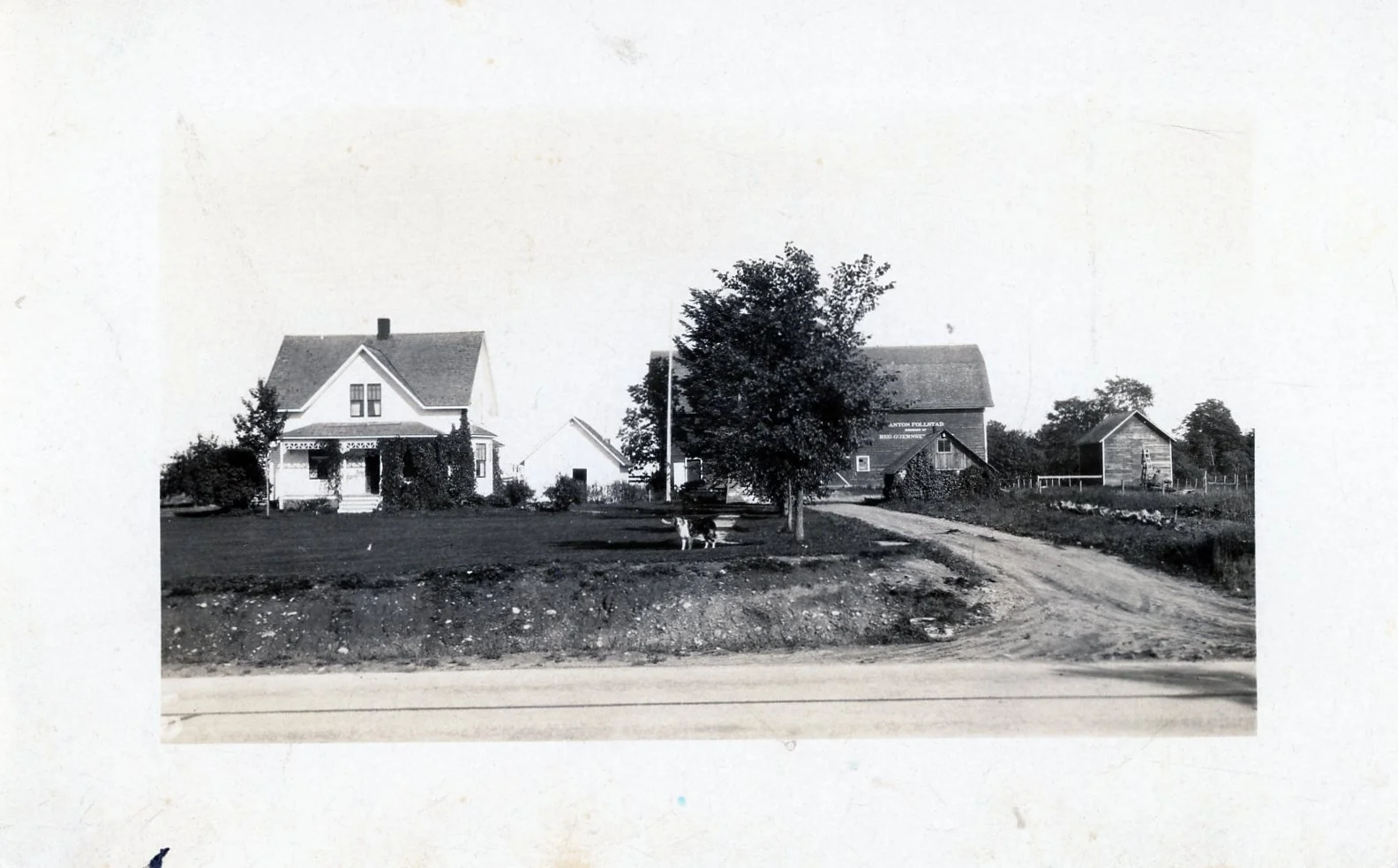
Anton Follstad Farm
By Bear Wheeler
Anton Follstad is a man who really made a name for himself and also for the Town of Elcho. The passage of time has mostly erased all of his accomplishments...until now. He is one of Elcho’s founding fathers, an immigrant from Norway, that through hard work and perseverance became one of the most well-known Wisconsin farmers from 1913-1935.
The story of Anton starts in the Follestad area in Royken, Norway. Royken was a farming district that by the 1840’s and 1850’s shifted into a manufacturing hub. Eventually, there was an economic downturn that led to stagnation starting in the 1870’s that lasted nearly 20 years, driving many Norwegian families to immigrate to North America where the United States was having an economic boom. This was the situation where Anton was placed, he was born on December 7, 1861. When he became a young man, this area was hurting economically and the possibility of a prosperous life in America sounded adventurous.
Before we leave the shores of Norway, there is a man I want to mention that is written about in the Follstad history. His name is Bernt Andreasen Follestad/Frogstvedt and I would think that Bernt is Anton’s uncle on his mother’s side. He is remembered as a kind and righteous man with many interests. He became a local politician who committed himself to many tasks but fulfilled them with great care and accuracy. Because of what he did in his life, he was known as the “pride of his community.” As we unravel the life that Anton lived, you will understand why this man was mentioned here.
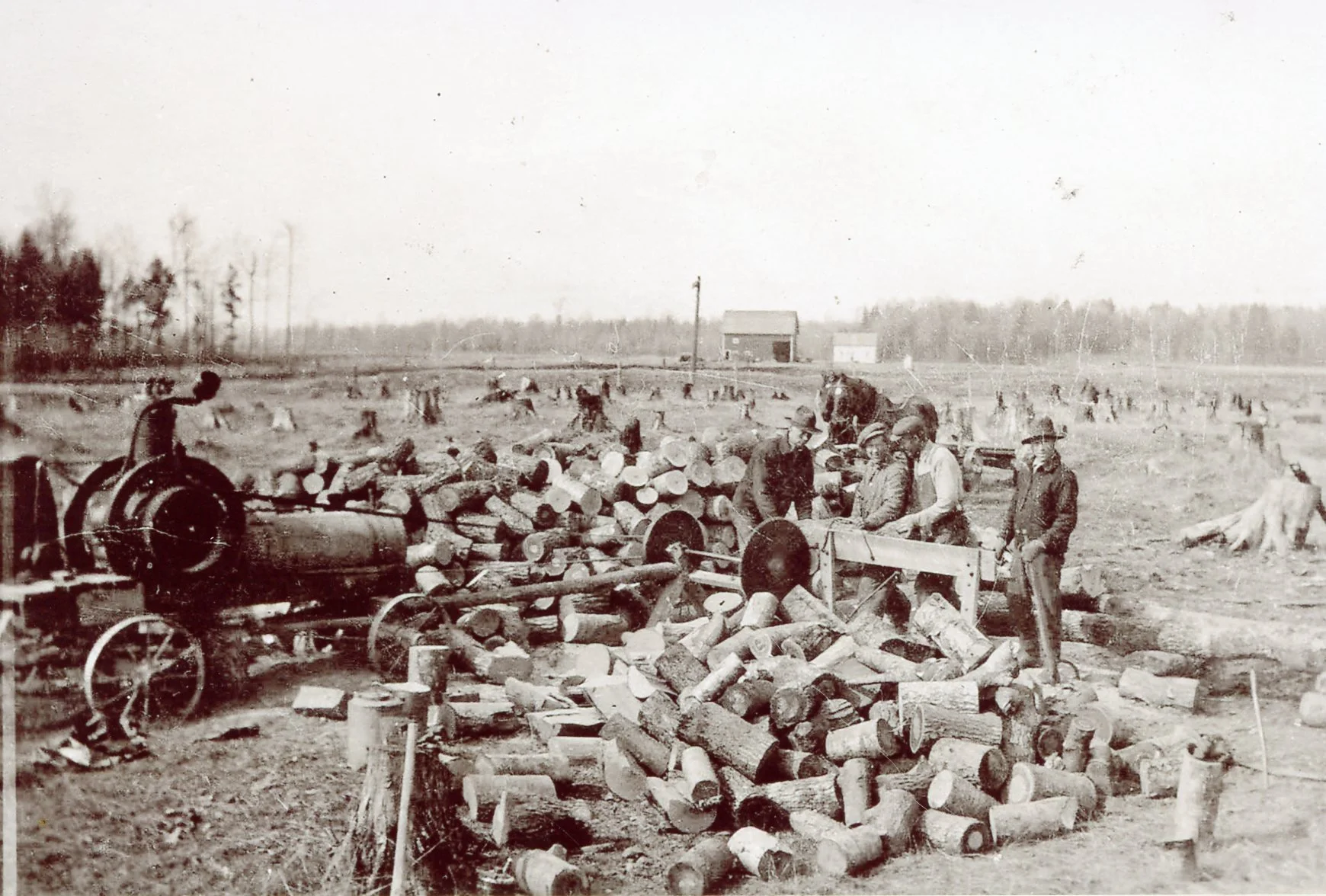
Barn and Old House Built - No Out Buildings Built Yet
Anton came to America in May of 1880 to Mount Morris, Wisconsin, to his cousins Hans and John Thompson. He stayed there and worked on farms that fall and went to school in the winter, to learn the English language. In the spring, he went with a group to the Northwoods sawmills to find work. Anton’s excursion led him to Rhinelander to a place called Adam’s Portable Log Bungalows Company. A bungalow is what we now call a cabin. What leads me to believe that this was the sawmill that Anton worked at was that there were two pictures of this place in his collection of photos on glass plates. It was no small task to photograph this way so it had to be done intentionally. Photography was a hobby for Anton, he took many pictures of his family and friends, logging, farming, and early Elcho. Without him, we would be at a loss to know what this area looked like.
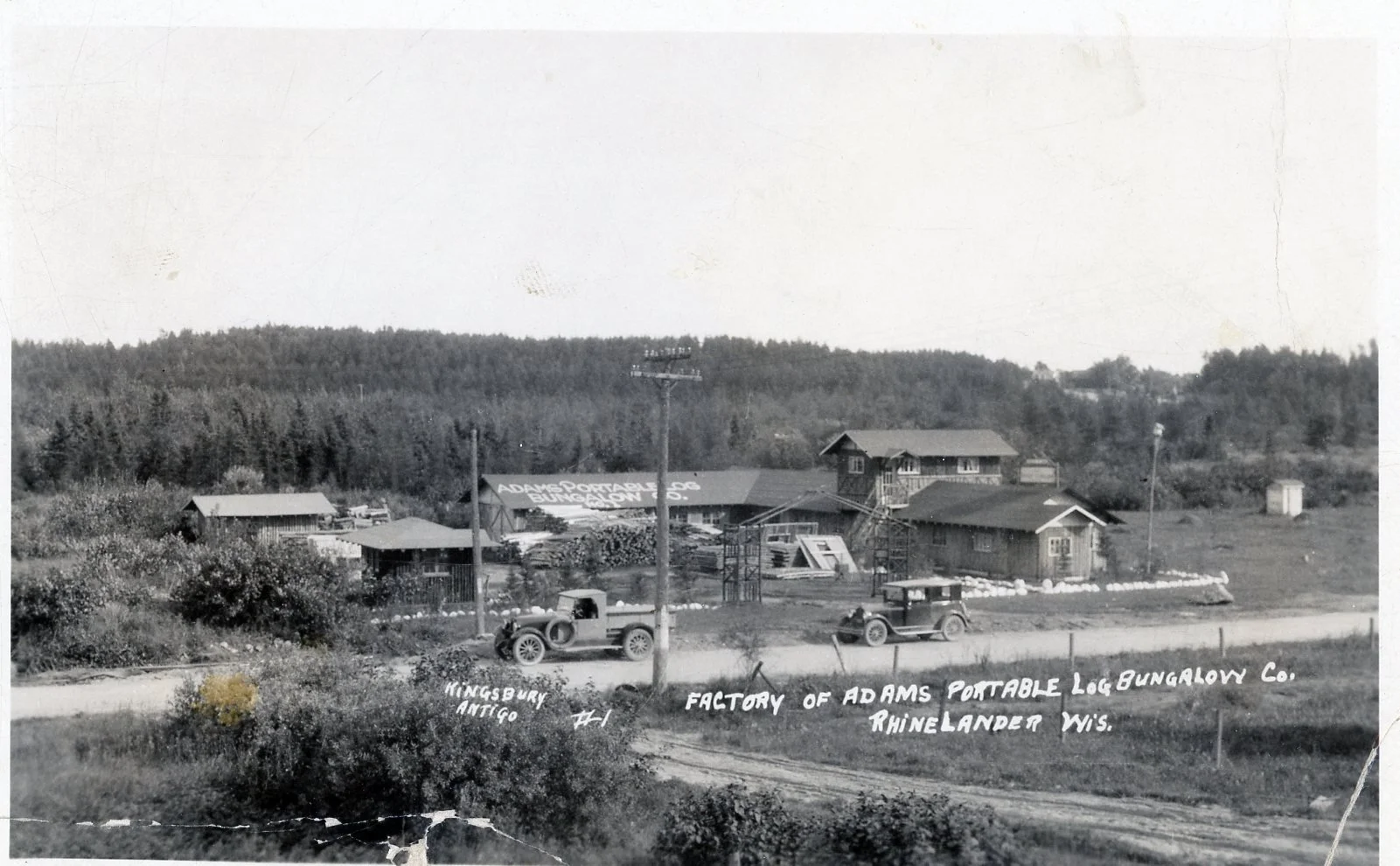
Portable Log Bungalow Company - Rhinelander WI
In 1881, Anton was in Rhinelander working for the portable log bungalow company, saving his money so that he could purchase his independence. It was in this year that two of his brothers, Julius and Andrew came to America. By the fall of 1885, Anton’s cousins, Thorvald and Sigvart Solberg had made their way to Elcho, purchasing property on the northside of Otter Lake, north of Sunset Road. Anton had come to Elcho to visit them and to see their purchase. He fell in love with the area and moved to purchase 80 acres adjoining his cousins’ land on the east side of Otter Lake. Right away Anton started to sink his roots into his new homestead.
On November 22, 1886, he was one of the signers of a petition to form the Elcho township. Once the winter of 1887 cleared, he started to clear the timber and plant potatoes in-between the stumps. He cleared a spot to put up a log house. In his spare time. he tended to town matters. Elcho became a township that year and Anton served as town treasurer for that first year. His brother Carl immigrated to America, but did not come to Elcho for a few years. The next year Anton became a town supervisor and served there until 1889, the year that the rest of his family moved to Elcho from Norway. Anton and his brothers sent tickets home so they could come. It was his parents, Johan and Maren, with the rest of his siblings, Bernhard, Sophia, and John. Working in the timber in the winter months, and growing potatoes in the summer, Anton was heavily involved in the fledgling town. He served as treasurer again from 1890-1893 and that election taking the job of town chairman until 1895. On September 22, 1894, Anton and Elcho’s first chairman, R.W. Cave were delegates of Elcho to the Langlade County Republican Convention. It was here that Anton received the nomination to run for county clerk as he was still the Elcho town chairman. There was an article in the Antigo Republican that said he was industrious, conscientious, and intelligent, ready for the job. In the November election, Anton had lost his bid for county clerk to the democrat nominee.
The following is found in the Follstad’s family histories, of which it is a section from a publication written in 1896 by W.A. Henry entitled, “Northern Wisconsin, A Handbook for the Home Seeker.”
EXPERIENCE OF A MILL-HAND IN MAKING A FARM IN LANGLADE COUNTY.
Anton Follstad, a view of whose home we show at Elcho, Langlade County, reports his experience in a letter as follows:
“I came to Elcho in the fall of 1885 to visit cousins who had each just purchased a 40 of land, and as the fine hardwood timber, rich soil and beautiful Otter Lake took my eye, I concluded to buy two 40’s next to my cousins and alongside the lake. The price of the land was $4.00 per acre, and as I had about $300.00 saved up, I paid $280.00 down and the balance within a year. I went back to work in the saw mill in Rhinelander where I had been working some years. In the spring of 1887, I came to Elcho to start farming, with little knowledge of tilling the soil and not very good health but with a good will and mind made up to stick to it. Have had great help from reading the agricultural papers and the bulletins of our experiment station and the Farmers’ Institutes.
I cleared off a spot where I put up a log house and then cleared about two acres more, one acre I planted potatoes with the grub hoe: had a good yield and sold all I could spare to families connected with the veneer factory. In the fall, I bought an ox team for $150.00 cash, cut, and hauled about 80 thousand feet of hardwood logs to mill that winter at an average price of five dollars per thousand, and I cut about that amount and put in the next succeeding four years from my 80. This gave me a start and I have cleared some land each spring, which I generally plant potatoes the first year as by this means the ground gets into condition to receive oats, timothy, and clover the next spring. The oats I always cut green for hay. In planting potatoes I break my new clearing ground, drag it well, and then set the plow out as far as it can be set and plow furrows crosswise: put the seed in the furrow twelve to sixteen inches apart and pull the loose dirt over the seed with a potato hook, making the ground level. I do no more with them except to kill the potato beetles, as ground well burned over will not grow many weeds the first year. In fair years I get about 250 bushels of fine quality potatoes and about 50 bushels of green end ones which I use for seed the next year. The green oats cut when in milk give an average of twenty-five thousand pounds per acre uncured.
Four acres of potatoes planted this year treated as above described, took only sixteen hours work for cutting out the weeds, poisoning the bugs; have just completed digging and have 1,460 bushels, giving 1,050 bushels selected potatoes and 410 bushels somewhat sunburned, and the smaller ones which I shall use for stock feeding.
Have now twenty acres of land cleared and part of it stumped. Have an interest with my brothers in a team of horses and three milch cows. My house, built two years ago, cost me $800.00, borrowed $500.00 for this which is now half paid. Have always sold my produce at home to the lumber camps and to families at good prices.
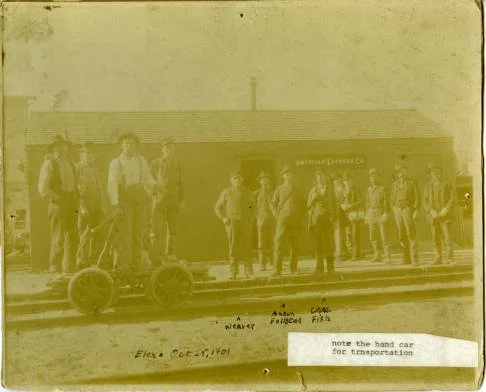
Elcho Depot October 25, 1901
After Anton was done with the town chairmanship, he took on the job of town clerk. He held this position for many years with a break in 1901-1905. He took it up again in 1905, as he was really starting to come into his own.
It was said that Anton got into growing potatoes from his cousin, Sigvart Solberg, who brought home a “single eye” which became the progenitor to the “Elcho” breed of the Rural New York variety. Anton’s jealous care in selection and cultivation of this strain grown the last ten years in Elcho, it became a standard for the Rural New York heirloom variety of potato. These seed potatoes were even sent to the U.S. government farm in Idaho to refresh the strain. Just to think that Anton had gotten this reputable reputation in the potato industry from reading farming journals and bulletins. Now this variety he probably started planting after 1900, because he started farming in 1887 as he said in above letter, just to make a go of it. It obviously worked out pretty well.
In the spring of 1899, Anton ran ads in the Antigo Republican for selling “Carman, No. 1, seed potatoes, as he had about 500 bushels to sell. He had them priced at $1 per bushel, $4.50 for five bushels, and ten bushels for $8.00. On a slightly different note, Anton received patent on a snow skate that he had designed. It was for ordinary walking during the winter, helping to glide along rather than slipping. Also, that year in 1900, he was secretary of the Republican Club of Langlade County pushing for the election of McKinley, Roosevelt, and LaFollette.
Somehow in Chicago, Illinois, Anton Follstad found love. Anton married Anna Hesbol there on June 23, 1906. The Follstad’s started their family with the birth of their first child, Erling on May 7, 1907, in Elcho. Just as fast as Anton’s potatoes grew so was his family, on February 5, 1909, another son Alwin was born.

Anton’s Farm East Side of Elcho Lake
Anton took to farming and raised 350 bushels of potatoes per acre in 1909 and in 1910 it showed nearly the same numbers. All the while Anna was at home taking care of their family and pregnant with their third child. Esther was born on November 21, 1910, in Elcho.
In 1911, Anton had 300 bushels per acre and his brother Carl raised 2,150 bushels on six acres, which is about 358 bushels per acre. Charles W. Fish’s farm raised 2,600 bushels on nine acres in 1910 (288 bushels per acre). One year, Anton pulled 400 bushels per acre on one of his fields. Anton was becoming a powerhouse of a potato farmer as he moved into the 20th century.
The year 1913 brought some changes to Anton’s professional life. Once the new town clerk was elected, Anton finally was done with town politics, his real passion was farming. He really consumed the farming journals, bulletins, anything he could to feed his scientific mind. Anton hybridized fruits, vegetables, and flowers, but he loved potatoes. People need potatoes and potatoes pay the bills.
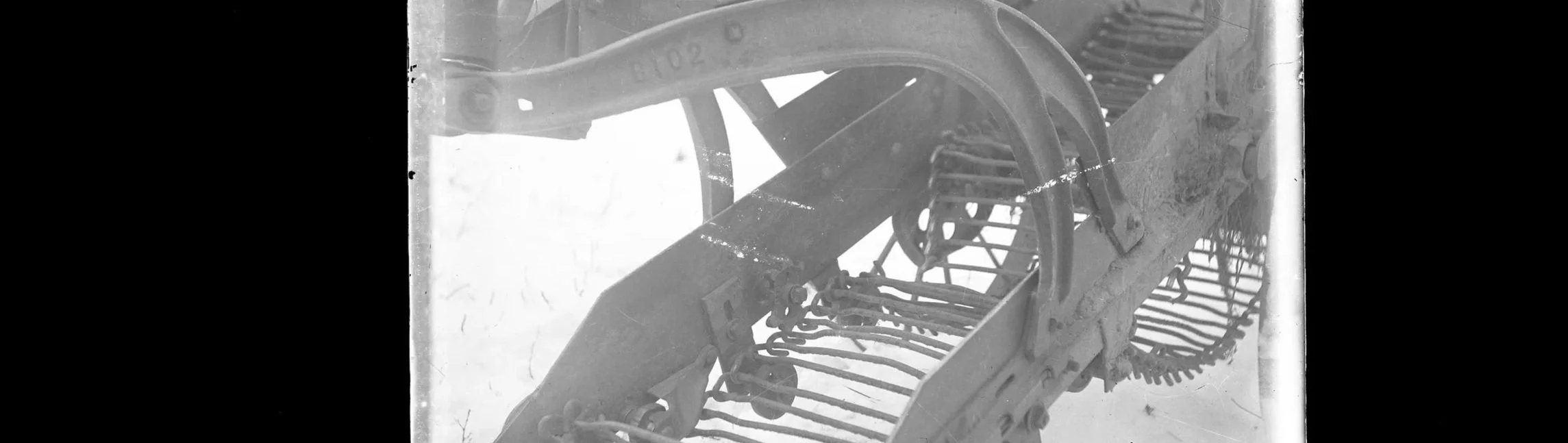
Early Potato Harvester
The Wisconsin Potato Growers Association held an annual convention at the Rhinelander Armory in 1913. Anton Follstad was elected to be the association’s vice-president. As far as all the potato exhibits per county, Langlade County was voted number one this year with Oneida County coming in second. Individually, Anton was awarded first place with a Rural New Yorker and Charles Beard of Elcho came in second.
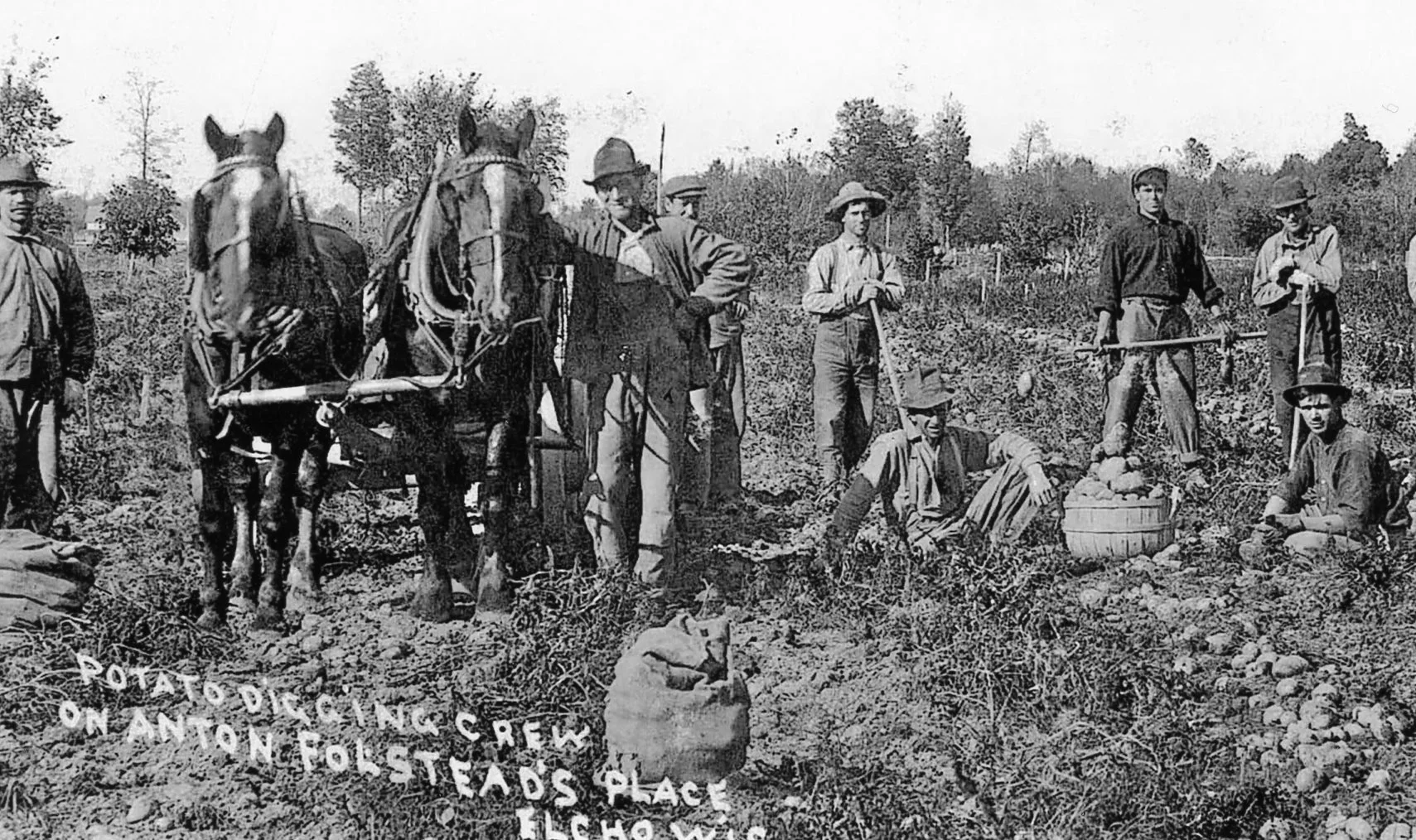
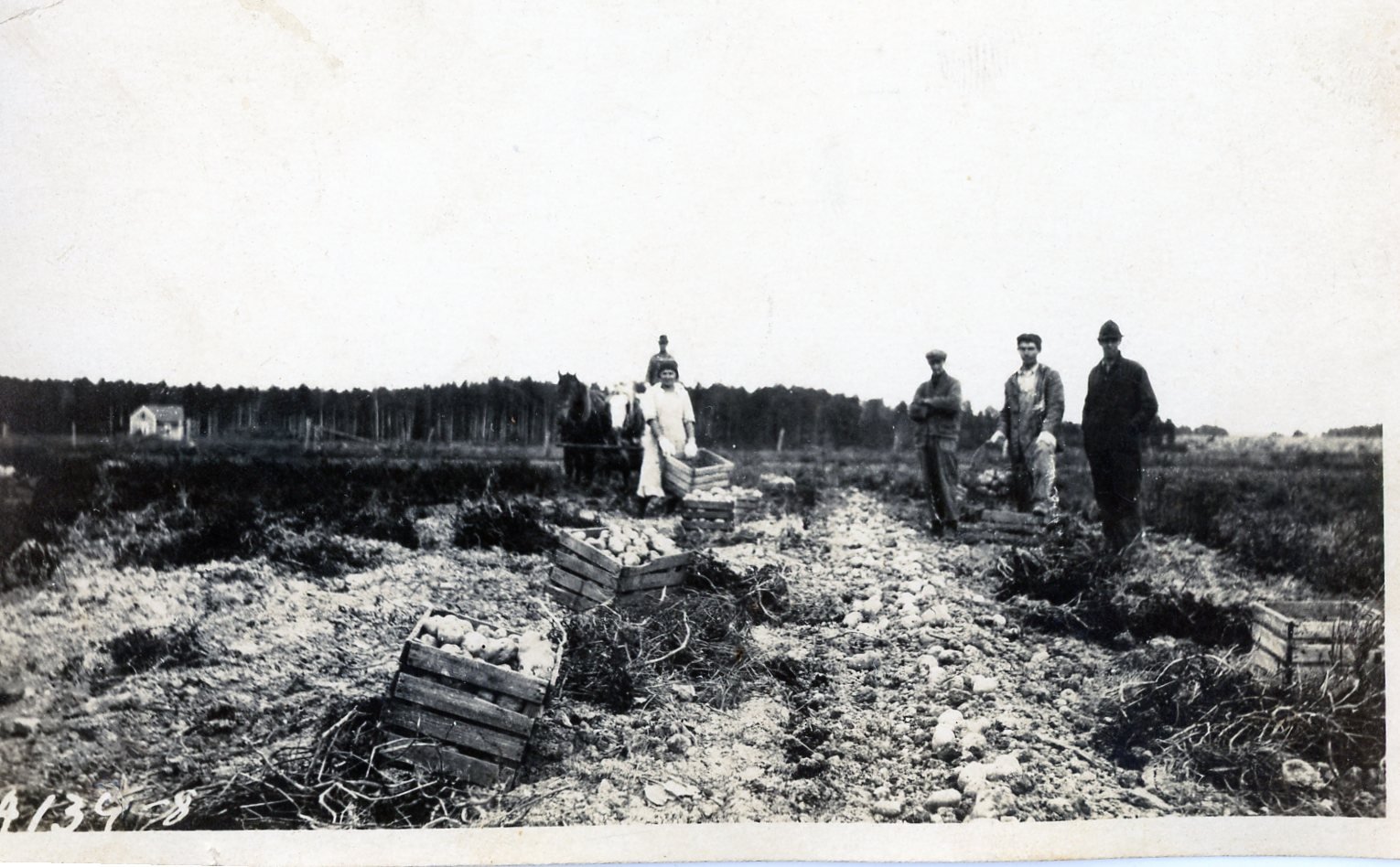
Potato Digging Crew
April 12, 1913, there is a newspaper article in the Evening Telegram that speaks of how wonderful an area that Elcho is. The writer brings up the fact of Anton Follstad, “One of the most progressive of them all is Anton Follstad of the Lakeside Dairy Farm, Elcho. He owns one of the finest farm houses to be found anywhere with all modern and sanitary conveniences. His large barn is a pattern of convenience, and therein he houses his pride—ten of the most valuable, registered Guernseys in that whole section. He was the first to begin with pure blood registered stock and now they are all following in his wake. He has 40 acres now half cleared and the balance the best of pasture for his dairy herd. He reports a yield of 16 tons of corn silo filling to the acre actual weight and believes that can be improved on with more intense cultivation. A yield of 400 bushels of the finest marketable spuds per acre is a common experience with him. He is one of the pioneer fruit growers of the county and every year gathers abundant for family use and some to sell. Twenty years ago, he began without a dollar, and to his unceasing energy and brainwork he owes all his prosperity and success.”
The 1914 Annual Convention of the Wisconsin Potato Growers Association was held in Grand Rapids, Wisconsin. All the potato growing counties of the state would attend, and Langlade County was well represented. In Langlade County, from the Elcho Township, there were three representatives that went to the convention. Of course there was Anton Follstad, Anton’s brother Carl Follstad, and Charles Beard. The other County representatives were Wilbur Sparks of Parrish, L.W. Filyes of Bass Lake, Charles Stengl of Antigo, and F.G. Swoboda also of Antigo.
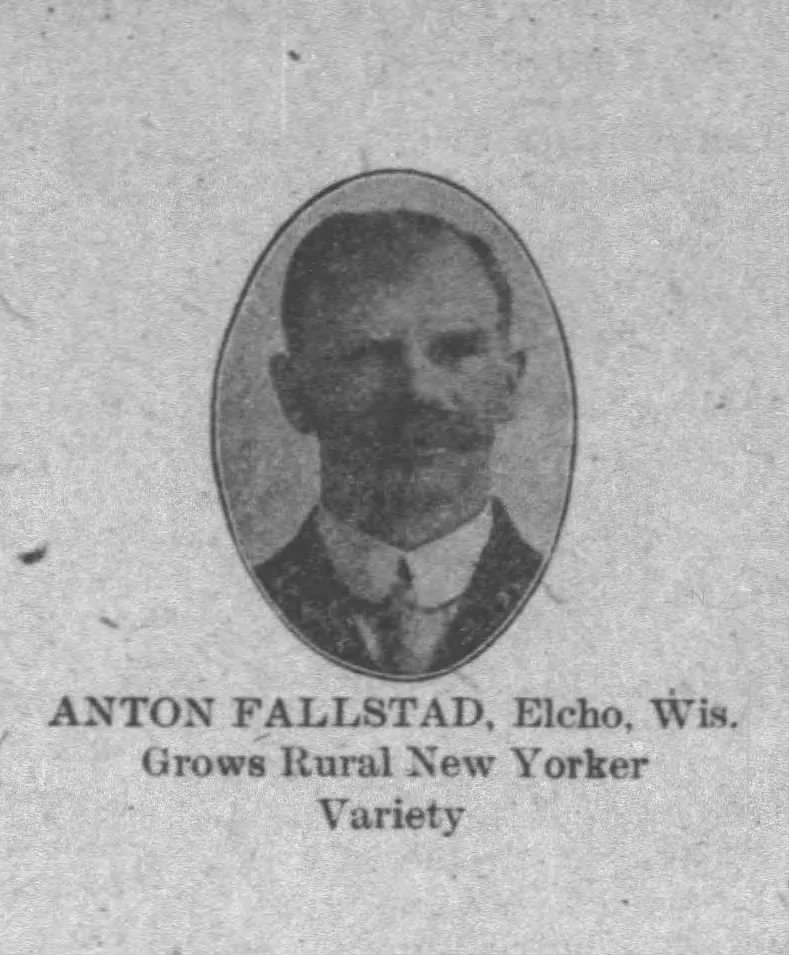
Anton Follstad was elected to be vice-president of the State Association of which he served from 1913-1915. There was exhibition of the best potatoes in the state held there and Langlade County was awarded third place that year (1914), falling behind Oneida and Wood Counties. On an individual basis, Anton was awarded first place for the second time for the Rural New York variety, and Charles Beard was awarded ninth place. This was against 71 different entries for this class. With all the varieties grown here, there were 205 entries in the open class in all. They said the convention arena looked like that of a state fair, very festive. Langlade County’s table concentrated on the individual growers they had then what the other counties did, but with growers of Anton Follstad’s caliber that is what you do. You would never know by the Elcho of the 21st century that it was a hub of some of the finest potatoes Wisconsin could offer. The article further said that Carl Follstad was one of the contributors of tubers to the show. I would think those were ones they sold there for eating and for other displays they had.
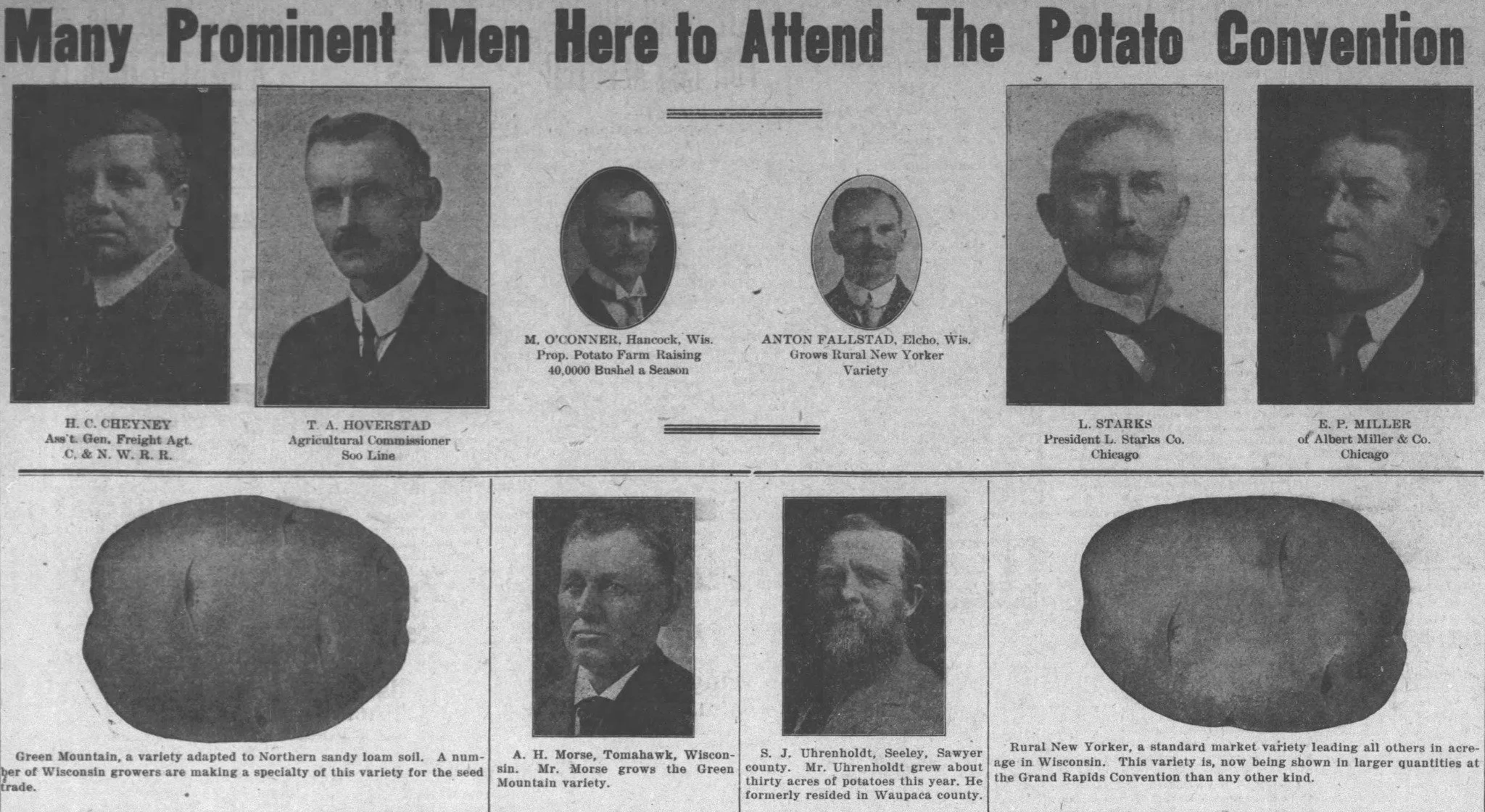
Potato Convention
Anton started to focus on Guernsey cows in 1915. He was elected as first president of the newly formed Langlade County Guernsey Breeders Association. Langlade County Guernsey Breeder’s Association was organized in May of 1915. First officers chosen were: President, Anton Follstad; G. Schroeder, Treasurer; F.G. Swoboda, Secretary.
Anton and Anna were expecting their last child that fall. Henry Bernard Follstad was born in Elcho on November 12, 1915. Anton and Anna’s family expanded just like their pure-bred Guernsey herd because he thought that a pure-bred ate just as much feed as a stock cow. The Guernsey would out-produce a stock cow in terms of milk production, with butterfat, protein, and vitamins, and not only stock cows, but even pure-bred Holsteins. The Guernsey’s were a smaller cow than a Holstein which meant they ate less and were more profitable.
With all the dairy that Anton produced, he would make ice cream and would sell it to towns folk. Anton and his brothers would also sell the milk products to the creamery much like the rest of the farmers in the area. Some places bought directly from the farmer, like the Muskie Inn, whom Anton’s brother Julius ran for some years in this era. As for the potatoes, Anton sold many as seed potatoes, but his brothers Carl and John had table stock and supplied the town. Of the table stock and the seed potatoes, most of the surplus though went out on the rail. The newspapers at the time mentioned that Chicago was a huge buyer of Langlade and Oneida County table stock potatoes. The Wisconsin Potato Growers Association helped the farmers get connections to buyers, which is how it is still done today.
Anton served as president of the Langlade County Guernsey Breeders Association for one year and was elected to the Executive Committee. Anton had the largest pure-bred herd of Guernsey’s in the county and they (the association) wanted to keep him around. R.P. Guptill had the next largest herd with nine head and he was also from Elcho by Enterprise Lake. At the 1916 county meeting, Anton gave an address and spoke most enthusiastically about the possibilities of pure-bred Guernsey herds in Northern Wisconsin. He had said that he sells out of his “crop” of calves every year in advance.
A family story was that around this time in 1917, Anton’s youngest brother John delivered milk to the Muskie Inn and fell in love with one of the kitchen help, Florence Moss of Kempster. Everyone called her “Florrie.” She was English by nationality and everyone else related to the Follstads were Norwegian. All the Follstads when they were around each other at home would all speak Norwegian. When John brought Florrie over things were different, there was a language barrier. One time Anton told everyone that when Florrie was around, we all speak English, so she wouldn’t feel out of place or not part of the family. They never did that again when Florrie was there.
1921
In 1919, the Elcho Guernsey Breeders Association was formed and R.P. Guptill was elected president, Anton Follstad, vice-president; Charles Beard, secretary; and Julius Follstad, treasurer. It was touted that some of the largest and finest herds of pure-bred Guernsey’s in the state are members of this association. Mr. Guptill and the Follstad brothers are attributed to the growing herd of Guernsey’s in the state. One article said that Anton once went down to the southern part of the state to acquire a sire for his herd and it didn’t meet his expectations and went home with nothing. That’s how strict a standard that he held, even though it cost him money and time. In 1921 and 1922, Anton served as secretary-treasurer to the Langlade County Guernsey Breeders Association.
An article in the Evening Telegram in 1923 stated that the Follstad brothers, Anton, Bernhard, and Julius donated property on Otter Lake to a Milwaukee organization that wanted to build a house for invalids. It was to be called the “Christian Home of the North.” It was to be designed after the Leyton Home of Milwaukee. It seems that the plan fell through. However, the Follstad brothers were willing to donate to this cause.
At the end of December in 1920, Anton was one of ten Wisconsin Representative farmers chosen to go to a conference with the Division (Bureau) of Markets within the U.S. Department of Agriculture. The conference was to complete a study of the cost of production on standard farm products as requested by the legislature. By this time in his life Anton really made a name for himself, especially for a man not raised in the lifestyle of farming.
In 1921 Anton concluded a two-year experiment he had been doing on how much potatoes grow after being killed by frost. His experiment showed that potatoes grew another 6.4% after the vines were killed by frost. Now if waited out it would increase the yield to 57 bushels per acre greatly increasing profitability. The U.S. Department of Agriculture took note of the experiment and placed it within its bulletin numbered 958; which refers to the Follstad experiment, placing it in the list of experiments made by prominent scientists in England, Germany, and the United States. This experiment was the first of its kind and original to Anton. He had said he was thinking about this for many years before conducting the experiment and proving that the tubers did grow after the frost killed the vines.
Driven by his passion for farming, Anton was serving as the secretary-treasurer of the Langlade County Guernsey Breeders Association in 1922. The present officers in 1922 are: President, R.P. Guptill; Secretary-treasurer, Anton Follstad. Now eighteen Guernsey breeders in Langlade County are members. The Guptill’s owned Echo Bay Farms over by Enterprise Lake and now Roderic’s herd exceeded Anton’s, which would help fulfill Anton’s dream of an expanding pure-bred Guernsey herd to produce top quality products in northern Wisconsin.
May 11, 1926, Anton had opened up a new shop in Elcho called the Rustic Novelty factory. It manufactured novelties from white birch with the bark including birdhouses, book-ends, flower pots and vases, match holders, and other articles. I am only able to find information on this from 1924-1926. Anton loved to try different things.
Now in the fall of 1934, Anton had made it into the newspapers once again with a new strain of potato that he tried in Elcho. It was called the “Katahdin,” known as a medium season variety, that he had made an exhibit in the window of the Olsen Hardware store in Antigo and it caught the eye of a prominent individual, J.G. Milward. Now Milward was the secretary of the Wisconsin Potato Growers Association, that Anton was once part of starting. Milward remarked from Rice Lake about the Katahdin, that it would replace the familiar Rural varieties. Anton was known in those days as the best-known grower of the Rural varieties and that introducing the Katahdin to this area will bring it into prominence. It is not known if Anton had a hand in developing this strain.
I asked John Jacobs once about Anton, if he had any memories of him. He had told me that when he was a young man in high school, that Anton was already an old man by that time. John had known what Anton did by what his parents told him, as his parents were commercial vegetable growers. John was wondering how to prune apple trees correctly and he went to Anton at his farm and inquired of pruning knowledge. John said that Anton was happy to teach him, he showed him the correct ways to cut the branches, and how the sunlight would hit the branch. John said that Anton really was scientific in horticulture and a very interesting fellow. There was a recollection that was passed down from Millie, daughter of Anton’s brother John, she had said that Anton did a lot of grafting of fruit trees and that he had an apple tree that had several different varieties of apples growing from it.
In these years, Anton was coming into the twilight of his life. The winter of 1939 brought him hardship, his wife Anna, of almost 33 years, became sick and passed away on February 17 at the age of 66. All their children had come back home to put their mother to rest and to help their father.
I find that in the spring of 1940 that Anton was still selling seed potatoes by the 100-pound sack. They were “Chippewas” for $1.50 per 100. Anton was nearly 80 years old at this time and still working the farm. His children would come out to visit him at least once a year. They had all left Elcho when they became of age and lived in other states as they were all slowly moving out to California.
Around 1945 Anton took an extended trip out to El Monte, California to visit his children. He was 86 years old and on Sunday, August 25, 1946, he passed away there in El Monte. The funeral home took care of arrangements to have his body brought back to Elcho for burial on Saturday, August 31, next to his precious wife, Anna.
In the newspapers toward the end of his life Anton is always brought up as an Elcho pioneer. My opinion is that Anton had as much to do with the growth of Elcho as Charles Fish. Reason why is because with Anton’s farming expertise and success, it pushed CW Fish to get into potato farming because it was so lucrative in those days. It provided much income for Fish, because of the slowing of the logging industry, and who really knows how much that helped Fish financially to rebuild the business district after the fire of 1923. Anton had a hand in this more than people realize. When you take a look at his life and accomplishments, it seems that Anton Follstad patterned his life after that of his Uncle Bernt, because he also became the “pride of his community.”